
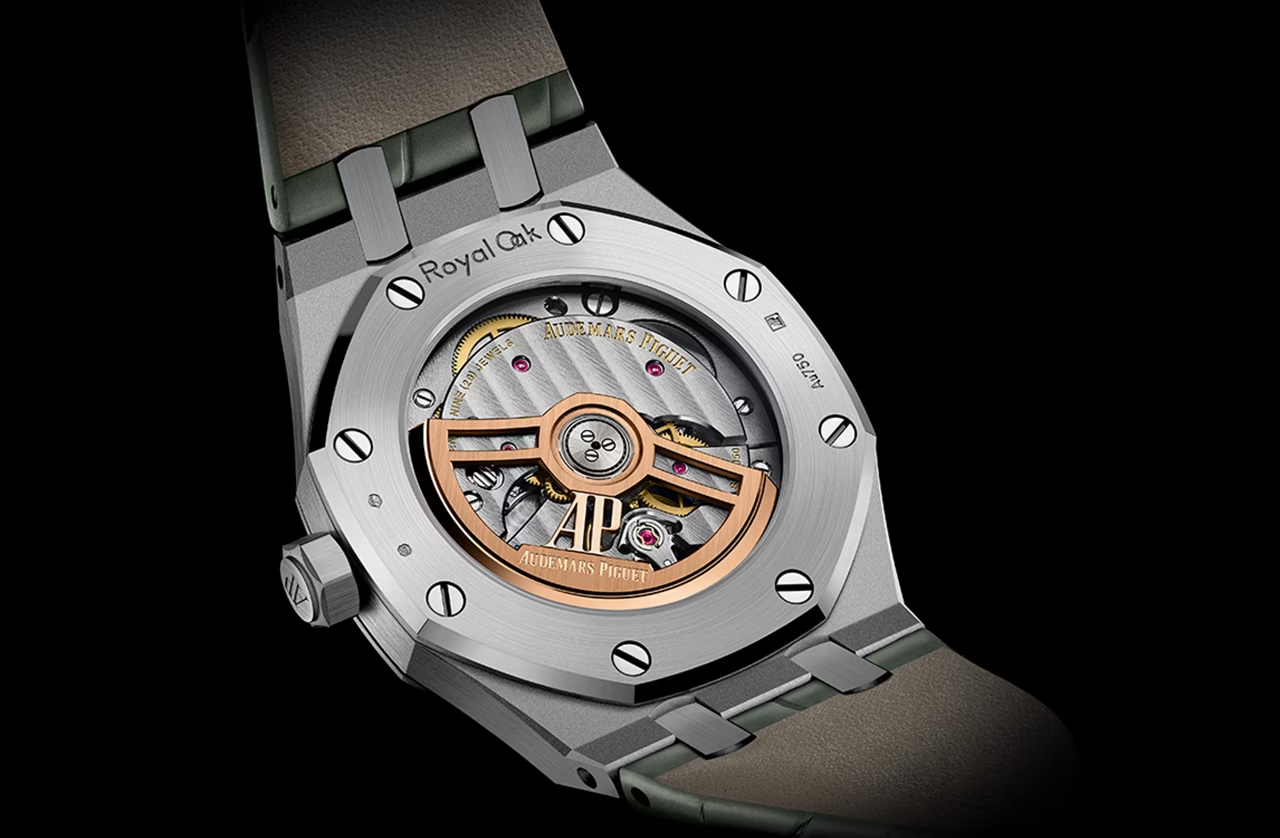
Across the United Kingdom, a quiet shift has been unfolding among watch collectors — one that speaks volumes about how refined tastes and practical sensibilities are reshaping the culture of horology. For decades, exclusivity has been the defining currency of the watch world, with rarity and brand prestige overshadowing everything else. But today’s collectors are choosing something far more personal, far more enduring: design fidelity.
For many, the subtle curves of an Oyster case, the purposeful symmetry of a Speedmaster-inspired dial, or the rugged poise of a diver silhouette hold more meaning than the brand stamped beneath the twelve o’clock marker. What matters is the design’s emotional resonance — the way it connects to memory, aspiration, or a deeply rooted appreciation for functional beauty.
This is why the modern conversation around AAA Replica Watches has shifted dramatically. No longer framed as “alternatives,” these pieces now represent a deliberate choice to honour iconic design without surrendering to the pressures of exclusivity. For collectors who value authenticity of experience over traditional notions of luxury, this approach is refreshing, liberating, and deeply meaningful.
The Changing Priorities of the Contemporary Collector
There was a time when owning a luxury watch was mainly about status — a signal of achievement, taste, and economic success. But collectors in today’s UK landscape see things differently. They know the difference between symbolism and substance, between brand value and design quality.
For many, the true essence of a watch lies not in its retail price or scarcity, but in:
- its proportions and balance,
- its finishing and tactile refinement,
- the clarity of its dial layout,
- the harmony of its colour and texture,
- and how naturally it becomes part of daily life.
These qualities cannot be monopolised by branding — they belong to craftsmanship, to thoughtful execution, and to the emotional connection between wearer and watch.
Design Fidelity: What Collectors Value Most
Design fidelity refers to how well a timepiece captures the spirit, lines, and proportions of a celebrated original. It is not about duplication; it is about respect for design language, coherence, and intent.
Collectors judge design fidelity through a number of subtle but important elements:
- Case contours that flow naturally rather than abruptly.
- Dial symmetry where markers, hands, and typography feel intentional.
- Proportionate lugs that neither dominate nor vanish.
- Bezel profiles that sit harmoniously atop the case.
- Bracelet tapering that lends elegance and comfort.
These fine decisions distinguish a timepiece that feels “right” from one that simply resembles something familiar. Modern collectors instantly sense when a watch possesses this kind of understated harmony — and when it does not.
This is where high-grade, thoughtfully curated luxury-inspired models excel. Their makers understand that design is a language — and they have learned to speak it fluently.
Why Exclusivity No Longer Defines Luxury
If exclusivity once defined luxury, today it risks feeling detached from what many enthusiasts actually value. A rare watch locked away in a safe may impress others, but it contributes little to the daily life of the collector.
True luxury, in the modern sense, has evolved into something more intimate and more practical: the ability to wear a watch confidently, comfortably, and joyfully without fear of damage or loss.
Collectors have realised that the freedom to enjoy a design every day often outweighs the prestige of possessing something rare but fragile. A beautifully made watch that can accompany you to work, dinner, travel, or weekend moments offers a luxury that exclusivity alone cannot match.
The Emotional Connection to Design
When collectors choose a watch based on design fidelity, they are choosing the part that truly matters — the part that lives on the wrist, in the rhythm of daily life, and in the small moments that shape memory.
It is the familiar sweep of the hands, the glint of light across a polished chamfer, the satisfying click of a bezel, or the soft articulation of a tapered bracelet. These elements evoke emotion far more consistently than rarity or brand status.
Many UK collectors speak of the calm confidence they feel when wearing a watch that resonates with them aesthetically, regardless of exclusivity. It becomes a companion, not a trophy — something that belongs to their story, not the story of a brand.
The Role of AAA-Grade Models in Modern Collections
As expectations rise, AAA-grade pieces have taken on a new significance. They are no longer considered “second choices,” but rather instruments of thoughtful collecting — watches selected for specific reasons such as:
- having a design that perfectly suits the wearer’s wrist,
- being ideal for everyday use without worry,
- offering balance between aesthetics and practicality,
- expanding a collection with variety instead of investment pressure,
- or serving as a way to appreciate design heritage more fully.
These watches allow collectors to access a wide spectrum of iconic silhouettes while maintaining the freedom to enjoy them in real-world situations. They democratise the beauty of great design — and that is a cultural shift worth celebrating.
How Design Fidelity Enhances Daily Wear
A watch with strong design fidelity behaves well in the rhythms of everyday life. It wears comfortably, aligns with personal style, and carries a quiet refinement that feels appropriate in all settings — whether in the office, at a café, during travel, or at dinner.
When a watch feels at home in both casual and formal environments, it becomes more than an accessory — it becomes part of a daily ritual.
This is why the pursuit of design fidelity has become central to modern collecting. It is not about imitation; it is about excellence in form and proportion.
A More Human, More Personal Approach to Collecting
Collectors today are not guided by what they think they “should” own, but by what feels meaningful to them. They choose watches that reflect their character, their taste, and their lifestyle — not simply their financial capacity.
This, perhaps more than anything else, explains why exclusivity has lost its monopoly over luxury. A watch that complements your day, that encourages freedom rather than caution, and that feels inherently “you,” delivers a richer, more personal form of value.
And for many in the UK, design fidelity offers exactly that.
Final Thoughts
The modern watch collector is thoughtful, discerning, and emotionally intuitive. They understand that the beauty of horology lies not in exclusivity, but in the nuance of design.
They appreciate craftsmanship not because of branding, but because of the way a well-made object enriches everyday life.
This is why the conversation around AAA-grade, design-focused timepieces continues to grow — not as an alternative to luxury, but as a celebration of its most meaningful qualities.
The shift away from brand exclusivity is not a rejection of tradition, but a rebalancing — a reminder that true horological pleasure is found not in the rarity of ownership, but in the quiet joy of wearing something that feels perfectly made for you.